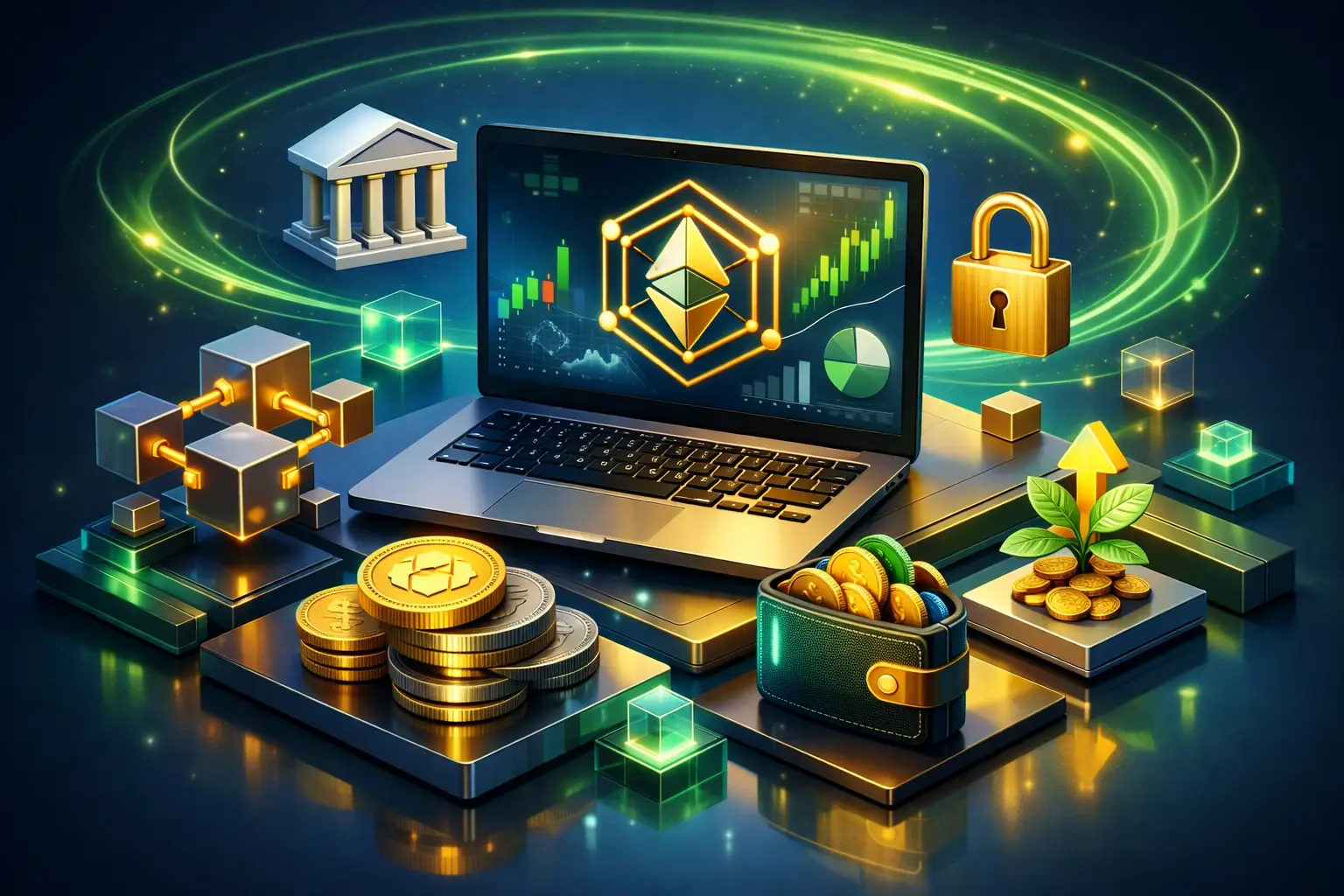

You do not need a suit, a banker, or even a brokerage app to move money in crypto. That is the pitch behind DeFi, and it is why so many new investors keep asking what is DeFi for beginners before they buy another token or chase the next trend. If crypto felt confusing before, DeFi can look like a maze. The good news is the core idea is actually simple once you strip away the jargon.
What is DeFi for beginners?
DeFi stands for decentralized finance. In plain English, it is a group of financial apps built on blockchains that let people do things like trade, lend, borrow, earn yield, and send money without relying on a traditional bank or centralized company to process every step.
Instead of a bank database, DeFi uses blockchain records. Instead of a company deciding who can access a service, many DeFi platforms rely on smart contracts, which are pieces of code that automatically execute transactions when conditions are met.
That sounds futuristic, but the real beginner version is this: DeFi tries to recreate financial services with software running on a blockchain.
Why DeFi caught so much attention
DeFi exploded because it offered something crypto traders love – access. Anyone with a compatible wallet, internet connection, and some crypto can often use DeFi tools in minutes. No branch visit. No application packet. No waiting for office hours.
For some users, that is the whole appeal. For others, the bigger draw is opportunity. DeFi opened the door to earning interest-like rewards, swapping tokens instantly, and joining new crypto ecosystems before they hit the mainstream. That potential upside is exactly why DeFi became one of the hottest corners of the market.
Still, access cuts both ways. It is easier to participate, but it is also easier to make expensive mistakes.
How DeFi works without a bank
Traditional finance depends on intermediaries. If you want a loan, make a stock trade, or earn interest in a savings account, a bank or financial company usually sits in the middle.
DeFi removes a lot of that middle layer. A decentralized exchange can let users swap one token for another through smart contracts. A lending protocol can let users deposit crypto so others can borrow against it. The system uses code, blockchain transactions, and community-run rules instead of a single institution managing the entire experience.
That does not mean DeFi has no structure. It does. It just shifts trust from a company to technology, open-source code, and the design of the protocol itself.
This is where beginners should pause. DeFi is not trustless in the everyday sense. You are still trusting the smart contract, the developers, the token economics, the blockchain network, and your own ability to use the system correctly.
The main things you can do in DeFi
Most DeFi activity falls into a handful of buckets.
The first is trading. Decentralized exchanges let users swap tokens directly from their wallets. You connect, approve a transaction, and trade without sending funds to a centralized exchange account.
The second is lending and borrowing. If you deposit crypto into a lending protocol, you may earn yield from borrowers. If you borrow, you usually need to post collateral first. That makes DeFi lending very different from a normal personal loan.
The third is staking and yield farming. These terms get mixed together, but they are not always the same. Staking often means locking tokens to help support a blockchain or protocol. Yield farming usually means moving funds into different DeFi pools to earn rewards, which can be much riskier.
The fourth is stablecoin usage. Stablecoins are crypto tokens designed to hold a steady value, often tied to the US dollar. In DeFi, they act like the cash layer for trading, lending, and parking funds between moves.
What makes DeFi different from a crypto exchange?
This is where a lot of beginners get tripped up. Buying Bitcoin on a big exchange is not automatically DeFi. That is often just centralized crypto trading.
A centralized exchange controls user accounts, custody, platform rules, and transaction flow. In DeFi, you usually keep control of your wallet and interact directly with on-chain protocols.
That extra control is a major selling point. It also means extra responsibility. If you lose your wallet seed phrase, send funds to the wrong address, or approve a malicious contract, there is often no support desk coming to save the day.
Why people use DeFi anyway
The upside is real, which is why DeFi keeps pulling attention even after market crashes.
Some users want self-custody, meaning they control their assets instead of leaving everything on an exchange. Some want access to tokens and protocols not listed on major platforms yet. Others want yield, speed, or the ability to move capital globally without the usual gatekeepers.
DeFi can also be more transparent than traditional finance in one key way. Transactions and smart contract activity are recorded on public blockchains, so users can often inspect what a protocol is doing. That does not make every project honest, but it does create a different level of visibility.
The risks beginners need to respect
This is the part that matters most. DeFi can be exciting, but it is not beginner-friendly by default.
Smart contract risk is a big one. If the code has a bug or exploit, funds can be drained. Even audited projects are not immune. Market risk is another. If token prices crash, your position can lose value fast, especially if you borrowed against volatile assets.
Then there is stablecoin risk. Not every stablecoin is equally safe. Some are backed more conservatively than others, and some models have failed badly.
There is also something called impermanent loss, which affects users providing liquidity to token pairs. In simple terms, if the price relationship between the two assets changes a lot, you may end up worse off than if you had just held them.
And of course, scams are everywhere. Fake apps, phishing links, rug pulls, and tokens built mostly for hype still catch new users every cycle.
What is DeFi for beginners who want to start safely?
Start smaller than your ego wants to.
If you are brand new, the smartest move is not hunting for triple-digit yields. It is learning the mechanics with a tiny amount of money you can afford to lose. Set up a wallet, learn how network fees work, understand token approvals, and practice reading transaction prompts before you chase returns.
Focus on established categories first. A beginner does not need five chains, twelve farming pools, and a stack of obscure governance tokens. One wallet, one major blockchain ecosystem, and one or two widely used protocols is enough to build real understanding.
Also, keep your expectations in check. DeFi is often sold as passive income, but there is nothing passive about managing risk in a fast-moving crypto market. Yields can change overnight. Token incentives can dry up. A strategy that looked smart last week can turn ugly after one bad market move.
A simple example of DeFi in action
Say you hold ETH and want to swap some of it for a stablecoin. In DeFi, you connect your wallet to a decentralized exchange, approve the transaction, pay a network fee, and receive the stablecoin directly in your wallet.
Or maybe you have stablecoins sitting idle. You deposit them into a lending protocol and earn variable yield from borrowers. That is DeFi too.
The mechanics are simple enough. The judgment call is harder. Which protocol do you trust? Which chain are you using? What fees are you paying? Are the returns worth the risk? That is where beginners need patience.
The biggest beginner mistake
The biggest mistake is treating DeFi like easy money instead of a financial toolset.
A lot of people enter DeFi through hype. They see a token pumping, hear about high APYs, and jump in before they understand liquidity pools, liquidation risk, or wallet security. That is how small mistakes become expensive lessons.
A better mindset is to treat DeFi like learning to drive a fast car. The speed is part of the appeal, but you respect the machine first.
Is DeFi worth learning in 2026 and beyond?
Yes, if you care about where crypto is headed.
Even if you never become a heavy DeFi user, understanding the basics gives you an edge. It helps you evaluate tokens more clearly, spot empty narratives faster, and understand how money moves across crypto markets. That matters whether you are trading altcoins, researching Ethereum projects, or just trying to avoid getting fooled.
For readers following fast-moving trends, DeFi is still one of the clearest windows into how blockchain goes beyond simple buy-and-hold investing. Some projects will fail. Some yields will vanish. Some sectors will get overhyped. But the bigger idea – open financial tools built on public blockchains – is not going away.
Start with curiosity, move with caution, and keep your first steps boring. In DeFi, boring is usually how you stay in the game long enough to catch the real opportunities.