
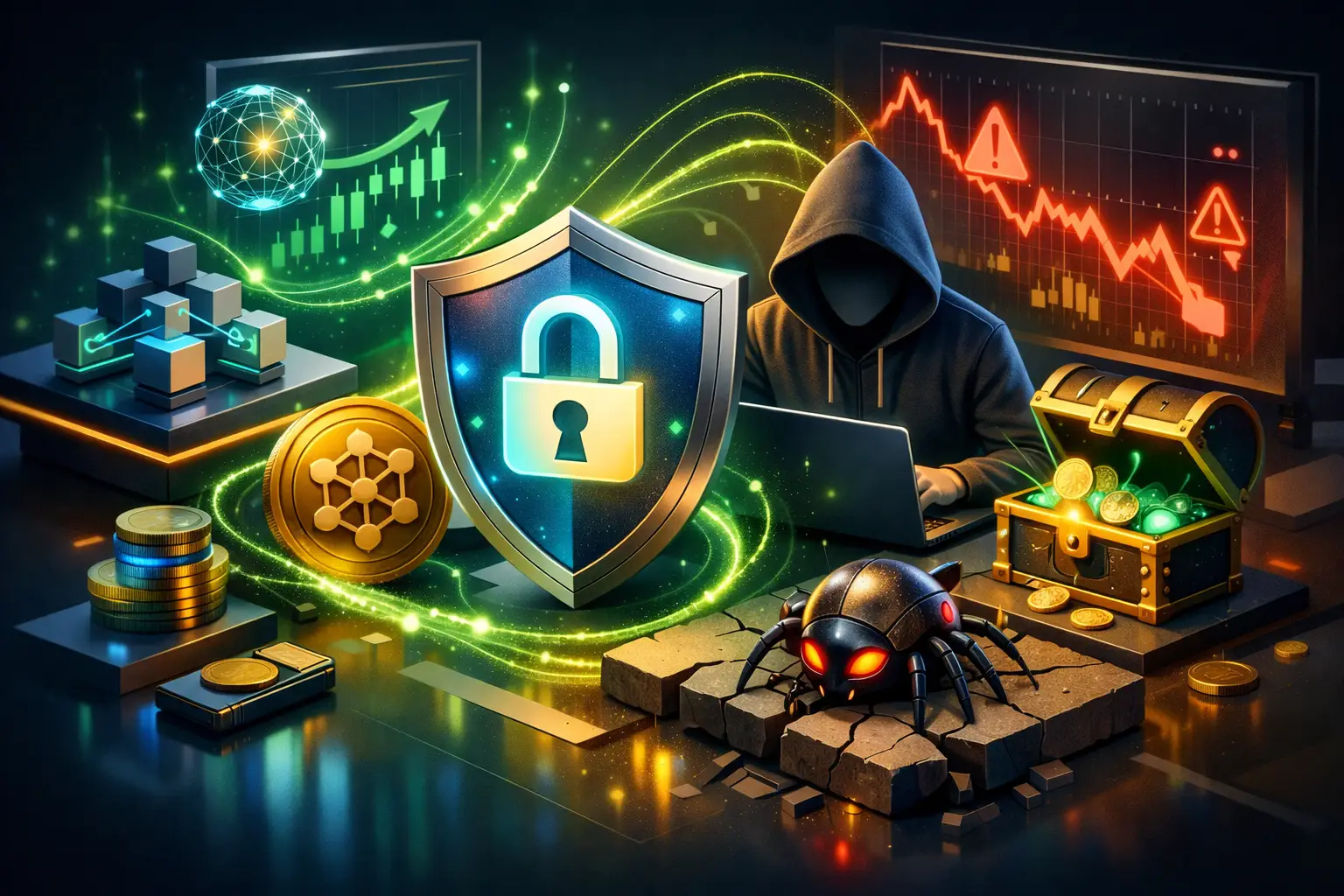

One bad click can wipe out a wallet faster than any market crash. That is why defi hacks explained simply is a topic every crypto user needs before chasing yield, bridging funds, or connecting a wallet to the next hot app.
DeFi can feel like easy money when token prices are flying and APYs look ridiculous. But the same systems that make decentralized finance exciting also make it brutal when something breaks. There is no bank hotline. No fraud desk. No guaranteed refund. If a protocol gets drained, users usually learn the hard way that smart contracts are only smart until they are not.
DeFi hacks explained simply: what actually gets hacked?
Most beginners picture a hoodie-wearing hacker breaking into a crypto website like a movie scene. In reality, DeFi hacks usually target code, permissions, price feeds, or user behavior.
A DeFi app is built from smart contracts, which are programs running on a blockchain. Those contracts control deposits, loans, swaps, staking, and rewards. If the code has a flaw, attackers can exploit it and move funds according to the contract’s own rules. That is what makes DeFi so strange to newcomers – many hacks are not brute-force break-ins. They are more like finding a legal loophole inside broken software.
Sometimes the protocol itself is exploited. Other times the user gets tricked first. A fake site, a bad wallet approval, or a phishing signature can hand over control without the victim realizing it.
The main ways DeFi hacks happen
Smart contract bugs
This is the classic DeFi nightmare. A protocol launches with code that has a vulnerability. Attackers spot it before the team does and use that flaw to drain liquidity, mint extra tokens, or manipulate internal accounting.
The scary part is that audited projects can still get hit. Audits help, but they do not guarantee safety. Fast-moving teams often ship updates, add features, or integrate with other protocols. Every change creates fresh risk.
Oracle manipulation
Many DeFi apps rely on price feeds, often called oracles, to know what assets are worth. If an attacker can distort that price, even for a short time, they can borrow too much, liquidate others unfairly, or drain value from the system.
This tends to hit smaller or thinner markets harder. If a token has weak liquidity, its price can be pushed around more easily. That means a protocol may look secure on paper but still be exposed through bad market design.
Flash loan attacks
Flash loans sound fake until you realize they are real and wildly powerful. They let someone borrow huge amounts of crypto with no collateral, as long as the loan is repaid inside the same transaction.
That feature is useful for advanced trading and arbitrage. It is also perfect for attacks. A hacker can borrow a massive amount, manipulate a price or exploit a flaw, extract profit, repay the loan, and keep the difference – all in seconds.
Flash loans do not cause every hack, but they make certain exploits bigger and faster.
Rug pulls and insider theft
Not every DeFi loss is a technical exploit. Sometimes the team behind a project simply takes the money, dumps tokens, or leaves hidden admin controls in place.
This is where the line between hack, scam, and bad governance gets blurry. A protocol might market itself as decentralized while a few insiders still control treasury wallets, upgrade keys, or liquidity pools. If those controls are abused, users lose just the same.
Phishing and wallet approval traps
A lot of users do not lose money because a protocol got hacked. They lose money because they approved the wrong thing.
When you connect a wallet to a DeFi app, you are often asked to sign transactions or approve token spending. Some approvals are limited. Others are unlimited. If you grant broad access to a malicious contract, it may be able to move your funds later.
This is why fake websites are so effective. They copy a real protocol, get users to connect wallets, and then sneak in approvals or signatures that hand over control.
Why DeFi keeps getting hit
The simple answer is money. DeFi protocols often hold millions or billions in on-chain assets, and the code is public. Attackers can inspect it all day, test ideas, and strike when they find a weakness.
There is also an incentive problem. Crypto moves fast, and teams feel pressure to launch before a trend cools off. The market rewards speed, hype, and token momentum. Security work is slower, more expensive, and less flashy. That trade-off is where a lot of trouble starts.
Composability adds another layer. DeFi apps plug into other DeFi apps like money Legos. That creates huge upside, but it also means one weak link can ripple outward. A protocol might be solid on its own and still get wrecked because a dependency failed.
The biggest myth beginners believe
A lot of new users think big TVL means safe. It does not.
A protocol with a ton of deposits can still be vulnerable. In fact, large pools can become bigger targets because the payout is worth the effort. On the flip side, tiny new projects can be dangerous because they lack audits, testing, and battle history. So the real answer is not to trust size alone. You need context.
Look at how long the protocol has been live, whether it has survived stress, how transparent the team is, what permissions admins still hold, and whether security issues were handled openly in the past.
How to protect yourself without becoming paranoid
You do not need to quit DeFi. You do need better habits.
Start with wallet separation. Keep a primary wallet for long-term holdings and a different wallet for experiments, mints, farms, and random apps. That way one bad approval does not put your entire stack at risk.
Be picky with approvals. If a site asks for spending permissions, pay attention to what you are authorizing. Unlimited approvals are common, but convenient does not mean safe. Revoke permissions you no longer need.
Slow down on links. A lot of damage happens because users click the first search result, a fake ad, or a copied social post. Bookmark real protocol sites and use those bookmarks instead of hunting them down every time.
Watch for admin risk. If a protocol can upgrade contracts instantly, pause withdrawals, or control key settings through a small team wallet, that matters. Centralized controls are not always bad, especially early on, but users should know the trade-off. More control can mean faster fixes. It can also mean more trust required.
Diversification matters too. Even if you love a platform, there is no prize for going all in on one bridge, one chain, or one farm. Spread risk across tools and ecosystems so one exploit does not become a portfolio-ending event.
Red flags that deserve a hard pause
If a project promises absurd returns with no clear explanation, treat that as a warning. If the docs are thin, the team is anonymous and evasive, and the tokenomics look designed to pump rather than last, step back.
Another red flag is rushed momentum. A lot of users ape into a protocol because everyone on social media is posting screenshots. Hype is not security. Sometimes it is the exact thing attackers count on.
It also pays to check whether a project has had incidents before. A previous exploit does not automatically mean avoid forever. Some teams respond well, improve controls, and come back stronger. Others reveal a pattern of sloppy launches and weak oversight. It depends on how they handled the failure.
DeFi hacks explained simply: the real lesson
The real lesson is not that DeFi is fake or doomed. It is that DeFi shifts responsibility onto the user much earlier than traditional finance does.
That trade can be worth it. Open access, self-custody, permissionless tools, and 24/7 markets are powerful. But they come with a price tag called operational risk. If you want the upside, you have to respect the downside.
For beginners, the smartest move is not to chase every shiny protocol. It is to build a system. Use separate wallets. Start small. Read prompts before signing. Treat huge yields like a sales pitch, not free money. And remember that in crypto, the most bullish habit is staying liquid enough to keep playing the game.
If you can learn that before your first mistake instead of after it, you are already ahead of most of the market.