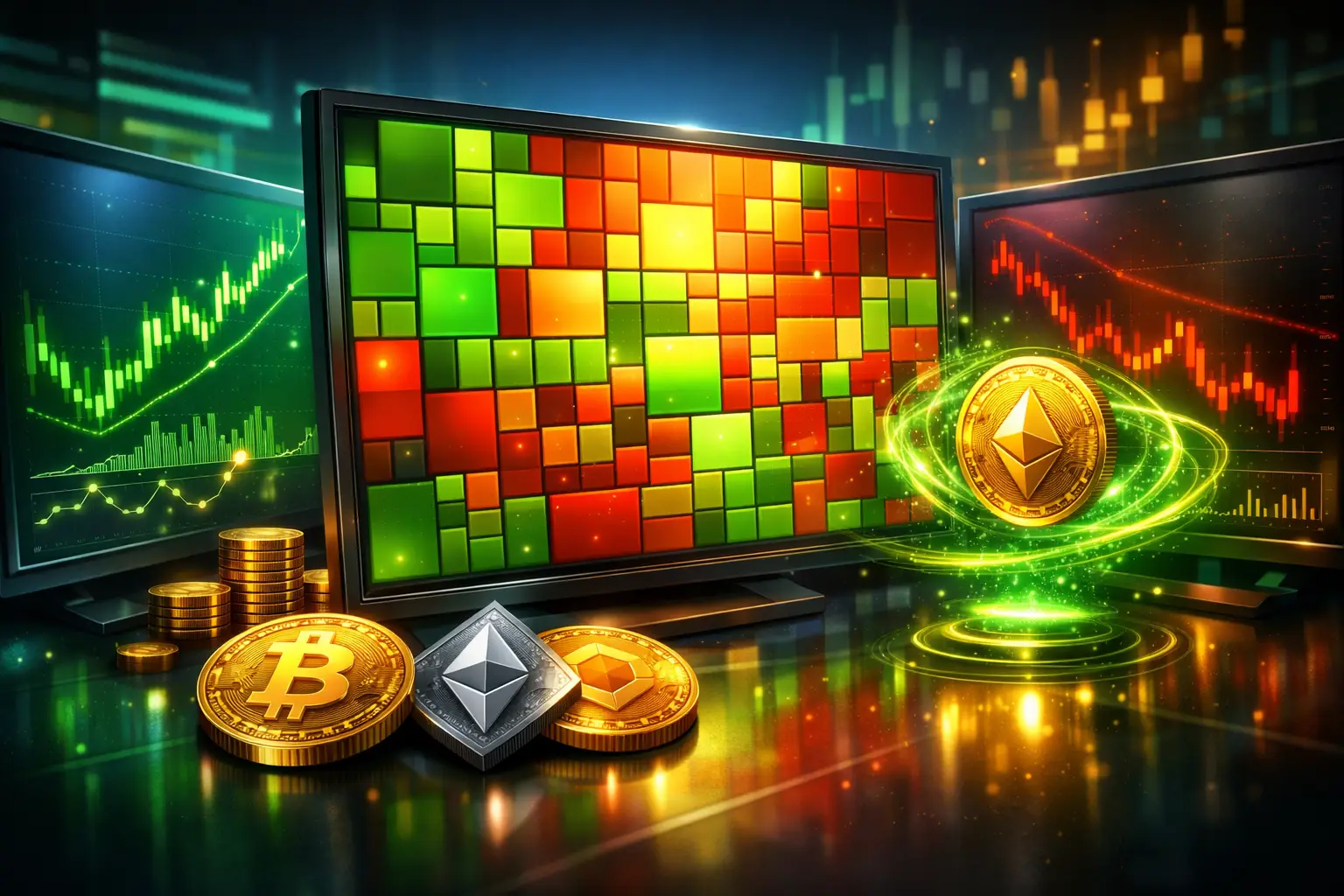

One glance at a crypto heatmap can feel like staring at a casino floor after midnight – flashing colors, oversized winners, ugly losers, and way too much noise. But if you know crypto heatmap how to read, that mess turns into a fast market snapshot you can actually use.
A heatmap is not a prediction tool. It is a visual shortcut. It helps you see where money is flowing, which sectors are hot, and whether the market move is broad or just driven by a few giant coins. That matters because plenty of traders get baited by one exploding token while the rest of the market is quietly rolling over.
Crypto heatmap how to read without getting fooled
The first thing to understand is that most crypto heatmaps are built around a few simple signals: color, box size, grouping, and timeframe. Green usually means price is up over a selected period. Red means price is down. Darker shades often mean a bigger move, while lighter shades suggest a smaller change.
That sounds easy, but this is where beginners make the first mistake. They see a giant bright green box and assume it is the best trade. Not always. That box might just represent a large-cap coin moving 4%, while a smaller token up 18% appears less important because its market cap is tiny. A heatmap shows relative visual weight, not just raw upside.
Box size usually reflects market cap. Bigger coins like Bitcoin and Ethereum dominate more space because they carry more value in the market. Smaller altcoins take up less room even if they are moving harder. So when you read a heatmap, ask two separate questions: which coins are moving the most, and which coins matter the most to overall market direction?

That distinction is huge. If Bitcoin and Ethereum are green, the market can look healthier than it really is. If those two are red while a cluster of meme coins is pumping, the heatmap may be signaling speculation rather than strong market structure.
Start with the timeframe before you read the colors
A heatmap only makes sense in context. The same market can look bullish on a one-hour view and ugly on a seven-day view. Before you react to the colors, check the timeframe being shown.
On a short timeframe, a green heatmap may just reflect a bounce after a sharp sell-off. On a daily timeframe, broad green can suggest stronger momentum. On a weekly view, it might simply mean the market is recovering from oversold conditions. Timeframe changes the story.
This is why heatmaps are best for quick orientation, not instant decision-making. If you are day trading, the one-hour and four-hour views may help you spot short-term rotation. If you are swing trading or building positions, the 24-hour and seven-day views usually matter more. A lot depends on your style.
What the colors really tell you
Colors are the first thing your eye catches, but the deeper read comes from how those colors are spread across the map. A mostly green board suggests broad participation. That usually means sentiment is improving and buyers are active in multiple areas.
If only a handful of boxes are green and the rest are flat or red, the move is narrow. Narrow rallies can keep going, but they are less convincing. They often depend on a few names doing all the work.
The same logic applies in sell-offs. If nearly everything is red, the market is in risk-off mode. If only one sector is red while others are holding up, that may signal rotation instead of full panic.
Shade intensity matters too. Light green across the board often points to a cautious grind higher. Deep green in scattered pockets can mean momentum chasing. Bright red concentrated in majors can be more serious than dark red in random low-cap coins.
Size matters more than most people realize
A heatmap is designed to pull your focus toward the biggest boxes. That is useful because large-cap assets often set the tone for the whole market. If Bitcoin is weak, altcoin rallies become harder to trust. If Ethereum is gaining while DeFi tokens are also green, that can hint at sector follow-through.
But size can also distort perception. A small coin can be up 25% and still barely show up. That does not mean it is irrelevant. It means the heatmap is showing market importance, not just performance. You should read size as influence.
This is where a lot of retail traders get trapped. They chase tiny green boxes without realizing the broader board is turning red. Big-cap weakness can crush smaller coins fast. Heatmaps help you avoid that if you use them as a market context tool instead of a hype detector.
Sector grouping can reveal where money is rotating
Some heatmaps group coins by category, such as Layer 1s, DeFi, AI tokens, meme coins, gaming, or exchange tokens. This is one of the most useful features because it shows whether a move is isolated or part of a bigger trend.
If AI-related tokens are all printing green while the rest of the market is mixed, that suggests a narrative trade is underway. If DeFi turns green after a quiet stretch, capital may be rotating into yield and infrastructure plays. If meme coins dominate while majors stall, traders may be leaning into pure risk.
Sector rotation matters because crypto often moves in waves. Bitcoin runs first, then large-cap alts, then smaller names, then highly speculative corners of the market. It does not always happen in that exact order, but the pattern shows up often enough to watch for it.
A heatmap gives you a quick way to spot those shifts early. For readers tracking both crypto and AI narratives, this can be especially useful when AI-linked tokens suddenly start outperforming after a tech headline or earnings cycle lifts the broader AI trade.
What a crypto heatmap does not tell you
This part gets ignored too often. A heatmap does not show volume clearly unless paired with another tool. It does not explain why a coin is moving. It does not tell you if the move is driven by news, liquidations, low liquidity, or whale activity.
It also does not show whether a coin is near major resistance, breaking down from support, or just bouncing inside a larger downtrend. A lot of bad trades happen when people confuse visual strength with real strength.
That is why the smart move is to use the heatmap as a first filter. Once something stands out, check the chart, market cap, volume, and recent headlines. Heatmaps are great at showing where to look next. They are not the final answer.
A simple way to use a heatmap in real time
Start with the broad view. Look at whether majors are green or red, and whether the market is moving together. Then check which sectors are strongest or weakest. After that, look for outliers – coins that are clearly outperforming or underperforming their peers.
If a single token is bright green but its entire sector is red, be careful. That could be a short-lived event move. If a whole category is turning green together, the move may have more legs. Confirmation across a group usually matters more than one flashy name.
Next, match that read to your timeframe. A short-term trader might care about sudden rotation over a few hours. A longer-term buyer may want to see strength hold over multiple days. The heatmap can help both, but only if you read it through the right lens.
The biggest mistakes beginners make
The most common mistake is chasing color. Green looks exciting, red looks scary, and that emotional reaction can lead to buying tops or panic selling bottoms. Heatmaps are built to grab attention, so you need a calm read.
Another mistake is ignoring market cap weighting. A tiny token making a huge move does not mean the whole market is turning. On the flip side, weakness in Bitcoin or Ethereum can matter more than dozens of random altcoins flashing green.
The third mistake is using heatmaps alone. They are fast, not complete. If you combine them with price charts and a little news context, they become much more powerful.
Final thought
The real edge is not spotting the brightest green box first. It is understanding what the whole board is saying about risk, momentum, and rotation. Once you train your eye to read a crypto heatmap that way, the market starts looking a lot less random and a lot more readable.