
If you have ever looked at Bitcoin, Ethereum, or the latest altcoin headline and thought, “I should probably know what blockchain actually is,” you are in the right place. This is blockchain explained for beginners without the jargon wall, the fake guru energy, or the assumption that you already speak fluent crypto.
The simplest way to think about blockchain is this: it is a shared digital record book. Instead of one company or bank controlling the record, copies are spread across many computers. When new information gets added, the network checks it, agrees on it, and stores it in a way that is very hard to change later.
That sounds technical, but the basic idea is not. Blockchain is just a system for tracking who owns what, who sent what, or what happened and when. The reason people care is that it can do this without relying on a single middleman.
Blockchain explained for beginners: what it really is
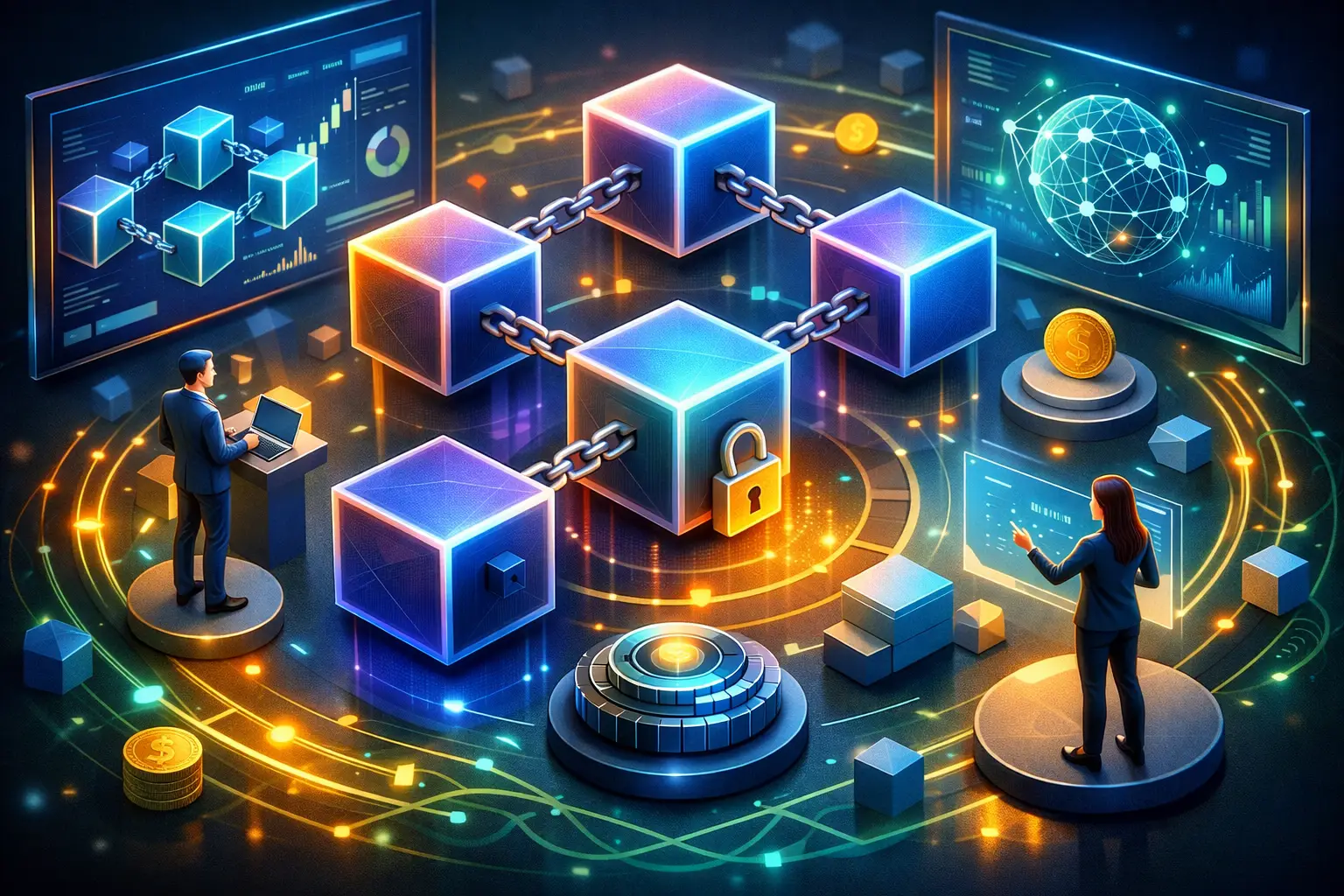
A blockchain stores data in blocks. Each block contains a batch of transactions or records. Once a block is full, it gets linked to the one before it, creating a chain. That is where the name comes from.
The key feature is that every new block connects back to older ones. If someone tries to alter a past record, it breaks the chain and the rest of the network can spot the mismatch. That does not make blockchain magically unhackable, but it does make tampering much harder than changing a normal spreadsheet on one server.

Imagine a group chat where every member keeps the same notes. If one person tries to secretly edit last week’s message, everyone else can compare copies and call it out. Blockchain works on a bigger, more mathematical version of that idea.
Why blockchain exists at all
Before blockchain, digital money had a trust problem. If I send you a photo, I still have the original file. Digital things are easy to copy. So how do you create a digital asset that cannot be spent twice?
That is the problem Bitcoin was built to solve. Its blockchain keeps a public history of transactions so the network can verify that a coin was actually sent and not duplicated. No bank has to sit in the middle approving every move.
That is the headline reason blockchain matters. It lets strangers coordinate around a shared ledger. In some cases, that means faster transfers, more transparency, or systems that stay online without one company flipping the switch. In other cases, it just means people are forcing blockchain into places where a regular database would work better. Both things are true.
How a blockchain works step by step
When someone sends crypto, that transaction gets broadcast to the network. Computers on the network, often called nodes, check whether the transaction follows the rules. For example, does the sender actually have the funds? Is the digital signature valid?
Once verified, the transaction joins others in a block. Then the network uses a consensus method to agree that the block is legitimate. Consensus is just the mechanism for getting a large number of participants to accept the same version of events.
On Bitcoin, this happens through mining, also known as proof of work. Miners use computing power to solve complex puzzles. The winner adds the next block and earns rewards. On many newer blockchains, including modern Ethereum, validation happens through proof of stake. Instead of burning huge amounts of energy on computation, validators lock up coins and help secure the network.
Different chains use different systems, and that choice matters. Proof of work has a long security track record but uses more energy. Proof of stake is usually faster and cheaper but comes with its own trade-offs around validator concentration and incentives.
Public vs private blockchains
Not every blockchain works like Bitcoin.
Public blockchains are open. Anyone can join, view transactions, and participate in validation depending on the rules. Bitcoin and Ethereum are the biggest examples. These networks lean into decentralization and transparency.
Private blockchains are restricted. A company or small group controls who can access the system and who can update it. These can be useful for business processes, but they are not as decentralized. In many cases, critics argue that calling these systems “blockchain” is more marketing than revolution.
That distinction matters because a lot of beginner confusion comes from hearing one word used for very different setups.
Blockchain explained for beginners through real use cases
The most obvious use case is cryptocurrency. Blockchain powers Bitcoin, Ethereum, stablecoins, and thousands of other digital assets by keeping a verifiable record of ownership and transfers.
Then there are smart contracts. These are programs that run on blockchains like Ethereum and automatically execute when conditions are met. That is the engine behind DeFi apps, NFT marketplaces, blockchain games, and token launches. Instead of a bank or platform manually processing an action, code handles it.
Supply chain tracking is another popular example. A blockchain can log where products moved, when they arrived, and who handled them. That does not guarantee the input data is honest, which is a big caveat, but it can improve record visibility.
Some projects also use blockchain for identity, ticketing, voting experiments, cross-border payments, and digital ownership. The idea is usually the same: create a shared system of record that is difficult to alter and easy to verify.
What makes blockchain different from a normal database
A normal database is usually controlled by one organization. That setup is faster, cheaper, and easier to manage. If you trust the company running it, there may be no reason to use blockchain at all.
Blockchain becomes more interesting when there is low trust between participants, when no single party should control the record, or when censorship resistance matters. If multiple groups need to agree on the same data but do not want one player holding all the power, blockchain starts to make more sense.
The trade-off is performance. Blockchains are often slower and more expensive than centralized systems. Every benefit comes with a cost, and this is one of the biggest reality checks beginners should understand early.
The big terms beginners keep hearing
Decentralization means control is spread across many participants instead of one central authority. The more decentralized a network is, the harder it is for one group to dominate it. But full decentralization can also make systems slower and harder to upgrade.
Immutability means records are difficult to change after they are added. Difficult does not mean impossible in every scenario, but the design strongly discourages rewriting history.
Consensus is how the network agrees on what is true. Without consensus, everyone could keep conflicting records and the system would break.
Wallets store the keys that let you access and move blockchain-based assets. The crypto is not literally sitting inside the wallet app. The wallet manages your credentials to interact with assets on the chain.
Gas fees are transaction costs paid to use certain blockchains, especially networks that support smart contracts. Fees can be tiny or painfully high depending on demand.
The risks nobody should skip
Blockchain has upside, but it is not a cheat code.
Crypto transactions are usually irreversible. If you send funds to the wrong address, fall for a scam, or lose access to your wallet keys, there may be no support desk to call. That freedom people love cuts both ways.
There is also volatility. Owning a blockchain-based asset does not mean it will go up. A coin can have strong tech and still get crushed in a bad market. Regulation is another moving target, especially in the US, where rules can shift the outlook for exchanges, tokens, and staking products.
Then there is plain old hype. Some blockchain projects are innovative. Others are recycled ideas with aggressive marketing and weak fundamentals. If a project cannot explain why it needs blockchain instead of a normal app, that is worth noticing.
So, is blockchain worth learning?
Yes, especially if you follow crypto, AI, fintech, or digital investing. You do not need to become a developer to get the core concept. You just need to understand what problem blockchain is trying to solve, where it works well, and where it gets oversold.
For beginners, the smartest move is to separate the technology from the token price. A blockchain can be useful even if a coin tied to it is speculative. A token can also pump hard even if the underlying project is shaky. Those are two different conversations, and mixing them is where a lot of people get burned.
If you remember one thing, make it this: blockchain is a shared digital ledger built to help people agree on records without trusting one central authority. That is the real foundation under the market noise. Learn that first, and the rest of crypto starts looking a lot less random.
The next time you see a token trend, a DeFi app spike, or a new AI-and-crypto crossover pitch, you will be in a much better position to ask the only question that matters: is blockchain actually solving something here, or is it just dressing up speculation in better branding?